

Heel pain gets most of the attention whenever shockwave therapy comes up, since plantar fasciitis is its best-studied use. The same acoustic pulses, however, are also used for other foot and ankle problems. If a tender Achilles or burning between the toes has stopped responding to rest and stretching, it may be worth asking whether shockwave therapy in Livingston, NJ, could help.
How Shockwave Therapy Works
Extracorporeal shockwave therapy sends brief pulses of sound energy through your skin and right to the source of your injury. By creating brief micro-injuries, the pulses force your body to send fresh blood and new collagen directly to the damaged area. It even helps quiet the nerve endings sending pain signals to your brain. You are getting true tissue repair rather than a temporary cover-up, all without any cuts, needles, or missed work.
Shockwave Therapy for Achilles Tendinitis
Repeated stress, tight calves, or sudden increases in activity can irritate the Achilles tendon. When symptoms persist, the tendon fibers may break down, slowing recovery. Shockwave therapy can reduce pain and improve mobility, especially when combined with eccentric calf exercises. A podiatrist in Livingston may recommend it when conservative treatments like stretching, heel lifts, and activity changes haven’t helped.
Shockwave Therapy for Morton’s Neuroma
Morton’s neuroma develops when tissue thickens around a nerve in your foot, usually between your third and fourth toes. It often feels like you have a pebble stuck in your shoe. You might notice burning, tingling, or numbness that gets noticeably worse whenever you wear tight or narrow footwear.
While the research here is not as extensive as it is for tendon injuries, several studies show noticeable pain relief and easier walking after just a few sessions. The treatment calms down the irritated nerve while boosting blood flow to the surrounding area. It works well as a middle ground if wider shoes and custom insoles haven’t solved the problem, helping you avoid cortisone shots or surgery. A podiatrist near you can confirm the diagnosis with an exam and, if needed, imaging.
Other Conditions Shockwave May Help
Shockwave is also sometimes used for:
- Plantar fasciitis that has not improved with stretching and orthotics
- Peroneal or posterior tibial tendinopathy
- Chronic heel spur discomfort
- Calcific tendinitis in the foot or ankle
What to Expect During Treatment
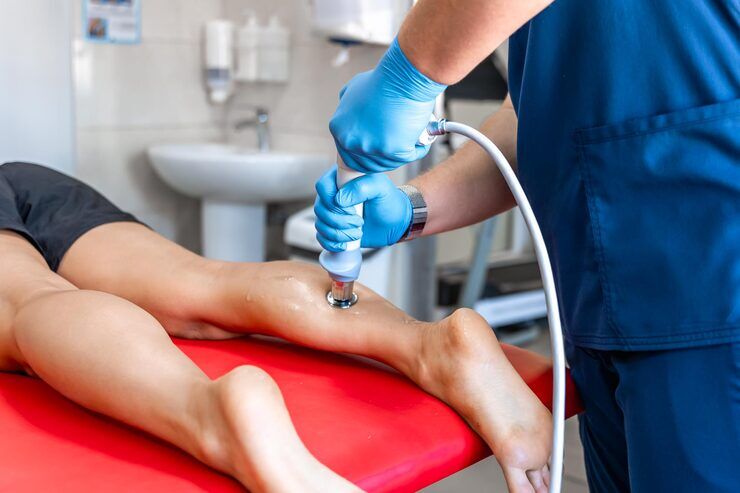
Treatment typically involves three to five weekly sessions. A provider applies gel and moves an applicator over the painful area, creating quick, firm pulses. Anesthesia is rarely needed. Mild soreness or bruising may occur for up to 48 hours. Relief develops gradually over several weeks. Shockwave therapy may not be suitable for people who are pregnant, have bleeding disorders, take blood thinners, or have an infection near the treatment area.
Find a Treatment Approach That Fits Your Needs
Ongoing tendon or nerve pain can make walking, standing, and other daily activities difficult. Understanding the cause of your discomfort is an important first step towards finding the right care. Contact Goldberg Podiatry Center to schedule an appointment. During your visit, you can discuss your symptoms, learn whether shockwave therapy may be appropriate, and explore other treatment options based on your condition and foot health.
FAQ’s
Is shockwave therapy painful?
You will feel a rapid, firm pulsing against your skin, but it is rarely painful enough to need any numbing. Any intense discomfort stops as soon as the machine turns off, though the area might feel slightly tender for a day or two afterward.
How many sessions are needed?
Three to five weekly sessions are common, though the number depends on the condition and its response.
Can shockwave therapy replace surgery?
It may reduce or delay the need for surgery in many chronic tendon and nerve problems, but it is not a guaranteed substitute.
How soon can normal activity resume?
Light activity can usually continue right away. High-impact exercise is often limited for a few days after each session.