


Sports Injuries in Livingston, NJ
Sports Injuries Near You
Foot and ankle injuries may happen suddenly or build over time. A sudden twist may cause an ankle sprain, while repeated running, jumping, or quick direction changes can strain tendons and other tissues over time. At Goldberg Podiatry Center, we treat sports injuries in Livingston, NJ, for athletes, recreational exercisers, and active patients who want to understand what is causing the problem and recover safely.
If you are looking for treatment of sports injuries near you, our team will assess your symptoms, movement, and the circumstances surrounding the injury. We consider factors such as pain, swelling, stiffness, and weakness before determining the most appropriate next step in your care.
What Are Sports Injuries?
Sports injuries are problems that affect the bones, joints, muscles, tendons, or ligaments during physical activity. Some happen all at once, such as after a fall, or sudden twist. Others develop gradually from repeated stress on the same area.
Common foot and ankle injuries include sprains, stress fractures, Achilles tendon problems, plantar fascia irritation, and overuse injuries.
If the pain continues or you are not sure how serious the injury is, our podiatrist in Livingston, NJ, can check the area and help determine the cause.
Common Foot and Ankle Sports Injuries
We may evaluate conditions such as:
Ankle sprains
Ligaments can stretch or tear when the ankle rolls or twists.
Stress fractures
Small cracks in a bone may develop after repeated impact or a sudden increase in training.
Achilles tendon problems
The tendon can become irritated from overuse or injured during a forceful movement.
Plantar fascia injuries
Repeated stress along the bottom of the foot may lead to heel or arch pain.
Tendon injuries
Tendons around the foot and ankle may become sore when training load exceeds what the tissue can handle.
Toe and forefoot injuries
Running, jumping, kicking, or direct impact can injure the toes, joints, or ball of the foot.
When Should a Sports Injury Be Checked?
Mild soreness after activity may improve with rest, but pain that continues or affects normal walking should not be ignored.
Consider seeing a podiatrist if you have:
Persistent Swelling
Swelling that continues without improving as expected.
Post-Injury Bruising
Bruising that develops after a twist, fall, impact, or other injury.
Weight-Bearing Pain
Pain or discomfort when placing weight on the affected foot.
Localized Tenderness
Tenderness concentrated around one specific area of the foot or ankle.
Ankle Instability
A feeling that the ankle is weak, unstable, or may give way.
Restricted Movement
Stiffness that makes normal ankle or foot movement more difficult
Regular visits to a podiatrist near you can help monitor your recovery, assess changes in strength and movement, and determine whether adjustments to your treatment plan are needed.
Why Early Evaluation Can Help
Continuing to train through an injury may place more stress on tissue that needs time to recover, potentially prolonging symptoms and delaying your return to normal activity.
Early evaluation may help:
Assess the Injured Structure
Identify the tissues or structures involved and determine the extent of the injury.
Protect Against Further Strain
Reduce stress on the affected area while it recovers.
Minimize Activity Disruption
Support recovery while limiting unnecessary time away from your usual activities.
Guide a Safe Return
Help determine when and how to gradually resume exercise or training.
Address Weakness or Instability
Identify factors that may affect strength, balance, or stability after an injury.
Review Footwear and Training Factors
Assess footwear, exercise habits, or training patterns that may be contributing to symptoms.
At Goldberg Podiatry Center, we provide treatment for sports injuries near you with attention to both the current problem and the activity you want to return to.
What Happens During a Sports Injury Evaluation?
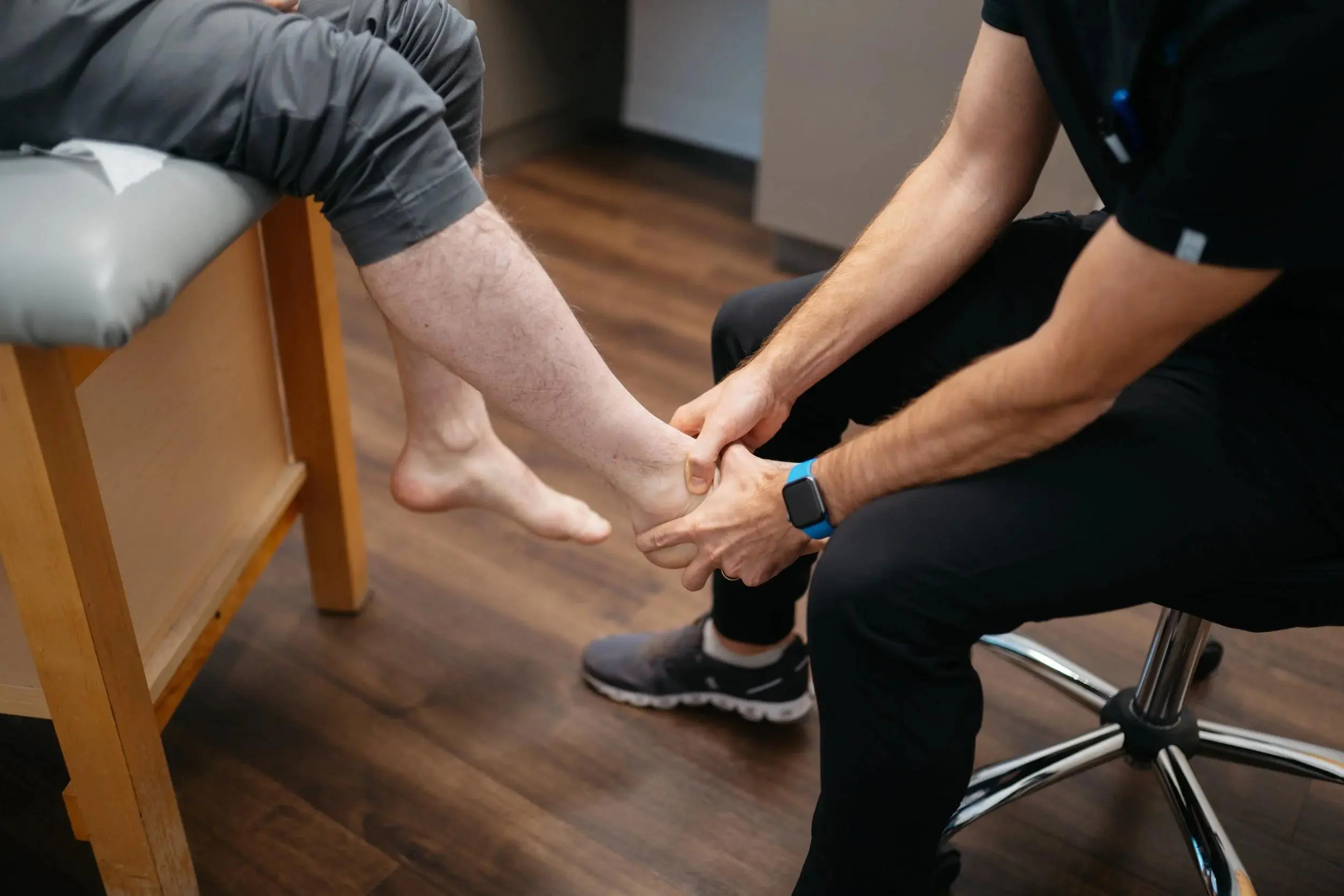
We review the circumstances surrounding the injury, when your symptoms first developed, and which movements or activities aggravate the affected area.
The examination may include:
Checking the injured area
We look for swelling, bruising, tenderness, and visible changes.
Testing movement
We assess range of motion and note which positions bring on pain.
Checking strength and stability
This may help identify tendon, muscle, or ligament involvement.
Watching how you walk
A limp or altered gait can show how the injury is affecting movement.
Using imaging when needed
X-rays or other imaging may be recommended if a fracture or deeper tissue injury is suspected.
Discussing the findings
We explain what we found and what the next steps may involve.
How Are Sports Injuries Treated?
Treatment depends on the injured structure and how severe the problem is. Your plan may include:
Activity changes
Avoiding painful movements for a period of time can reduce further stress.
Bracing or support
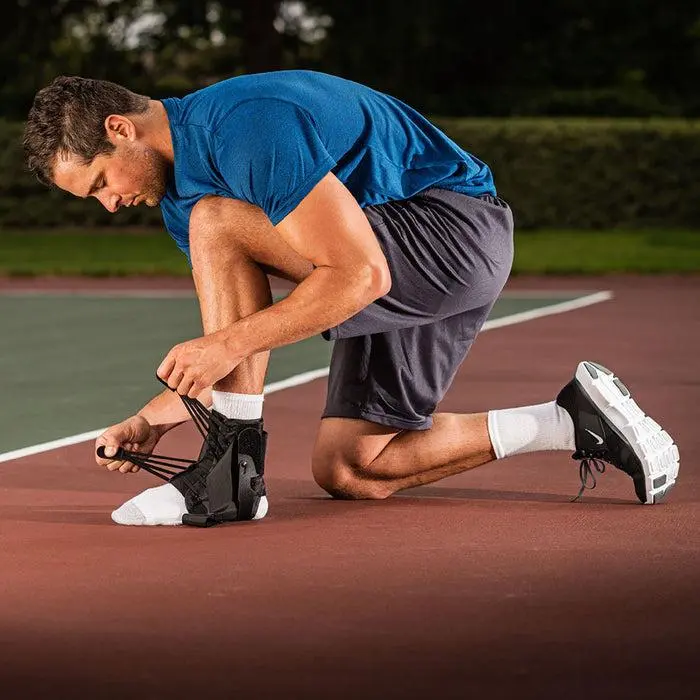
A brace, tape, or walking boot may help protect the injured area.
Supportive footwear
Proper footwear can reduce pressure while you recover.
Orthotics
Inserts may help improve support and reduce repeated strain.
Rehabilitation
Stretching, strengthening, balance work, or gradual loading may help restore function.
Shockwave therapy
This may be considered for selected chronic soft-tissue problems.
Regenerative medicine
Certain persistent tendon or soft-tissue conditions may be evaluated for regenerative treatment.
Surgery
More serious injuries may require surgical repair when appropriate.
Why Choose Goldberg Podiatry Center for Sports Injury Care?
We consider your injury, activity level, and goals when planning care.
26 years of experience
Dr. Karyn L. Goldberg has extensive experience evaluating foot and ankle conditions.
Careful diagnosis
We work to identify what is injured before choosing treatment.
Non-surgical options when appropriate
Many conditions can be managed without an operation.
Activity-specific planning
We consider the demands of your sport, exercise routine, or daily activities.
In-office options
Appropriate therapies can often be provided at the practice.
Return-to-activity guidance
We explain how to increase activity safely and when to slow down.
Support Your Recovery and Return to Activity
Recurring foot or ankle pain can make training difficult and may change the way you move. Finding the cause can help you make better decisions about recovery.
At Goldberg Podiatry Center, we treat sports injuries in Livingston, NJ, with a focus on restoring function and supporting a gradual return to activity. Visit us at 22 Old Short Hills Rd #214, Livingston, NJ 07039, United States, or call (973) 251-2906 to schedule an appointment.
FAQs
Should I keep exercising if the pain is mild?
If exercise keeps causing pain, slow down or stop the activity for a while. Have the area checked if the pain continues or keeps coming back.
How can I tell if I have a sprain or a fracture?
Both can cause swelling, bruising, pain, and difficulty bearing weight. An examination and imaging, when needed, can help tell the difference.
Why does the same ankle injury keep happening?
Repeated sprains may be linked to weakness, reduced balance, joint instability, incomplete rehabilitation, or returning to activity too quickly.
Do I need complete rest while I recover?
Not always. Some injuries require a break from one activity while other movements remain safe. The amount of rest depends on the injury and your symptoms.
How can I lower my risk of another sports injury?
Build up activity slowly, wear supportive shoes, and give your body enough time to recover. If pain keeps returning in the same area, have it checked before increasing your activity.