


Shockwave Therapy in Livingston, NJ
Shockwave Therapy Near You
Persistent heel, arch, or tendon pain can make walking, exercising, and completing everyday activities uncomfortable. When conservative measures have not provided enough relief, a non-invasive treatment may be worth considering. At Goldberg Podiatry Center, we provide shockwave therapy in Livingston, NJ, for selected foot and ankle conditions involving irritated or damaged soft tissues.
If you are looking for shockwave therapy near you, we provide personalized care close to home. We first evaluate the source of your symptoms and determine whether this treatment is appropriate for your condition. Each recommendation is based on your examination, health history, activity level, and treatment goals.
What Is Shockwave Therapy?
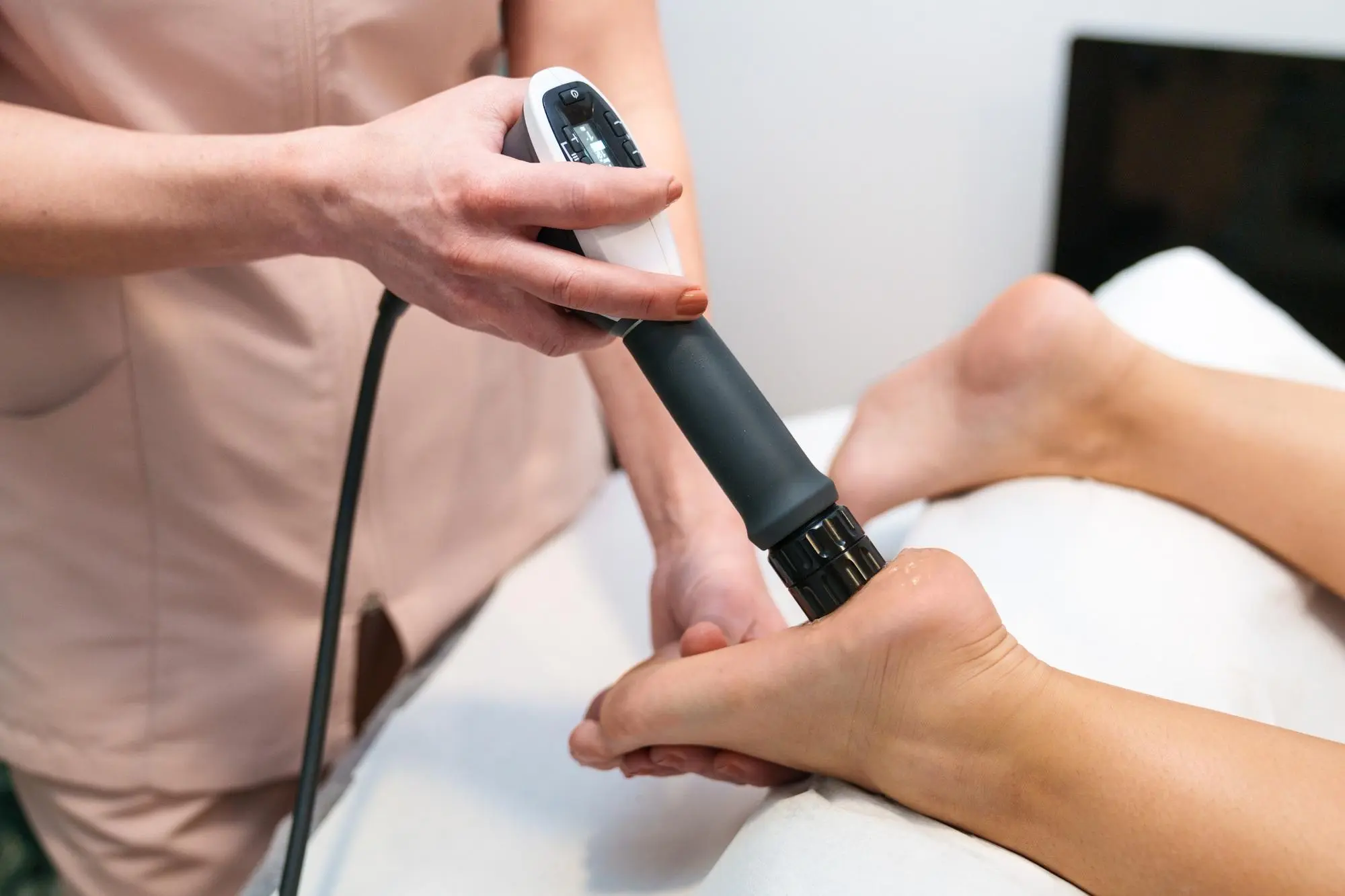
Shockwave therapy is a non-invasive treatment that delivers controlled acoustic pressure waves to a targeted area of the body. We utilise radial shockwave therapy for selected soft-tissue conditions of the foot and ankle. The treatment is intended to stimulate biological responses in the affected tissue and support the body’s healing process.
As different conditions can cause similar foot or ankle symptoms, a proper diagnosis should come before treatment. An examination with our podiatrist in Livingston, NJ, can help identify the source of discomfort and determine whether this type of therapy fits your needs.
Who Might Benefit From Shockwave Therapy?
This treatment may be considered for certain patients with persistent soft-tissue pain, particularly when symptoms have continued despite initial conservative care. It is not appropriate for every condition, so an evaluation is important before beginning treatment.
You may want to see a podiatrist if you have:
Persistent Heel Pain
Heel discomfort that continues and affects your ability to walk comfortably.
Ongoing Achilles Discomfort
Achilles tendon pain that remains noticeable during physical activity.
Recurring Tendon Pain
Repeated discomfort around a tendon or other soft-tissue structure.
Returning Symptoms
Pain or discomfort that comes back after periods of improvement.
Activity-Limiting Discomfort
Symptoms that make exercise or everyday movement more difficult.
Limited Response to Care
Pain that continues despite trying initial treatment or self-care.
Goldberg Podiatry Center currently uses radial shockwave therapy for conditions that may include plantar fasciitis, Achilles tendinitis, and selected neuroma-related concerns.
What Are the Benefits of Shockwave Therapy?
For appropriately selected patients, this treatment can offer a non-surgical approach to persistent foot or ankle discomfort. Potential advantages include:
No Incision Required
Treats the affected area without making a surgical incision.
No Anesthesia Needed
The procedure can be performed without anesthesia in appropriate cases.
Natural Healing Support
Supports the body’s natural healing process in the treated area.
In-Office Treatment
Allows the procedure to be performed in the office without a hospital stay.
Short Treatment Session
Treatment can typically be completed within a relatively short appointment.
Minimal Daily Disruption
May allow you to return to many normal activities with limited interruption.
Another Treatment Option
Provides an additional option when symptoms continue despite initial care.
At Goldberg Podiatry Center, we offer shockwave therapy near you as one of several treatment options that may be considered for chronic soft-tissue concerns. The goal is to choose care that fits both the condition and the individual patient.
What Conditions Can Be Treated?
Radial shockwave therapy is generally used for selected musculoskeletal and soft-tissue problems rather than every type of foot pain. Dr. Goldberg determines whether it is appropriate after evaluating your symptoms and the structures involved.
Conditions treated at the practice may include:
Plantar fasciitis
Persistent irritation of the plantar fascia can cause heel pain, particularly with the first steps after rest or prolonged standing.
Achilles tendinitis
Repetitive strain or irritation of the Achilles tendon can cause pain and stiffness near the back of the heel or lower leg.
Selected neuroma symptoms
In some cases, this therapy may be considered as part of a broader treatment plan for nerve-related forefoot discomfort.
Treatment recommendations depend on your diagnosis. Some conditions may respond better to footwear changes, orthotics, activity modification, medication, other in-office therapies, or a combination of approaches.
What to Expect During Treatment
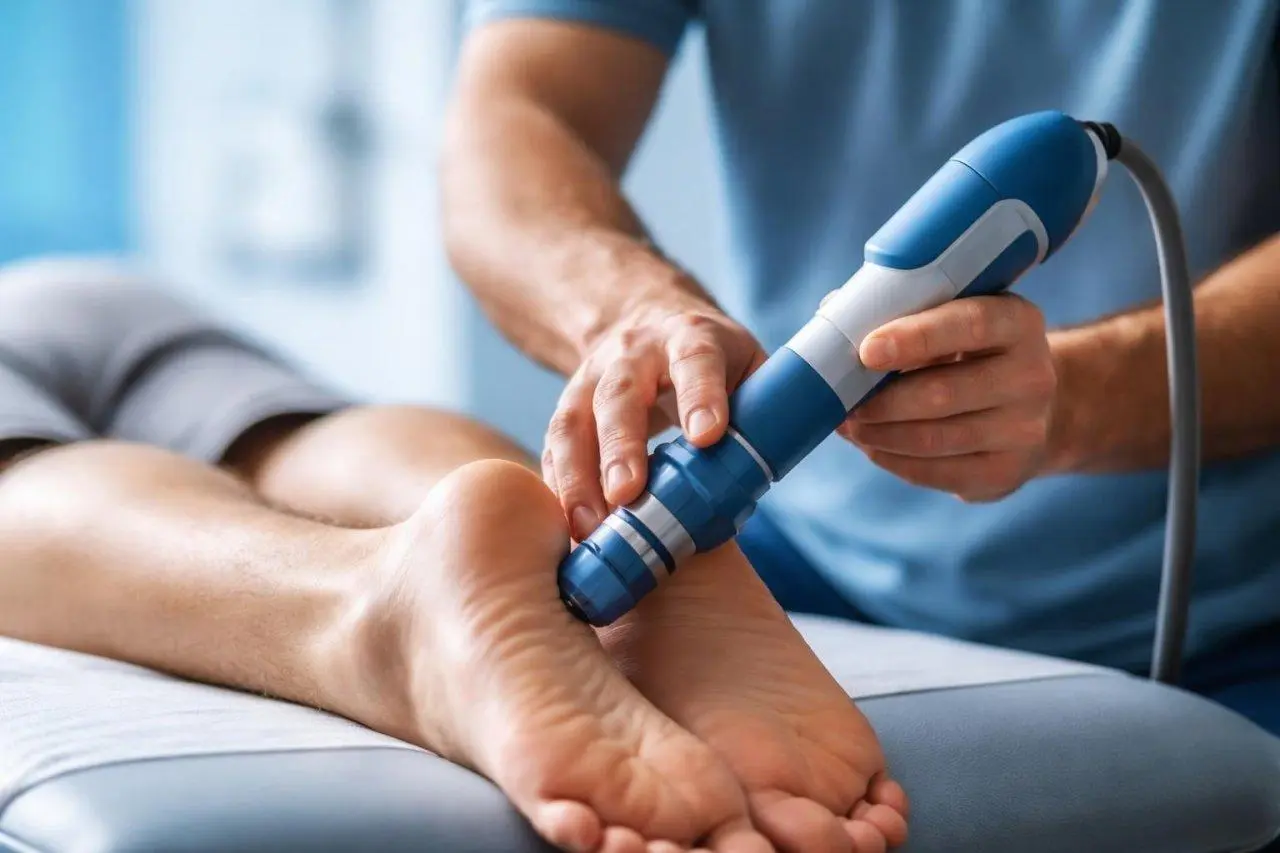
Before starting, we examine the area that is causing discomfort and confirm that radial shockwave therapy is appropriate for your condition. During treatment, a handheld device is placed over the affected area to deliver controlled acoustic waves into the targeted tissue.
Your shockwave therapy appointment may include the following steps:
Reviewing your symptoms
We discuss where the pain occurs, how long it has been present, and which activities make it better or worse.
Examining the affected area
We evaluate tenderness, movement, foot mechanics, and other relevant findings.
Confirming the treatment area
The specific region causing symptoms is identified before therapy begins.
Applying the device
The applicator is moved slowly over the treatment area while acoustic waves are delivered.
Monitoring your comfort
Some patients may notice temporary discomfort as sensitive tissue is treated.
Planning follow-up care
We discuss your response and whether additional sessions or supporting treatments are appropriate.
If you are considering shockwave therapy in Livingston, NJ, our team can explain the treatment process, expected sessions, and follow-up care based on your condition and individual needs.
What to Expect After Your Visit
Most patients can return to their usual routine soon after the treatment. You may notice some temporary soreness or sensitivity in the treated area, especially during the first day or so.
After your visit, we may recommend that you:
Following Activity Guidelines
Follow the activity instructions provided by our team.
Monitoring Symptoms
Pay attention to any changes in pain, tenderness, or discomfort.
Wearing Supportive Footwear
Use supportive footwear when recommended as part of your care.
Continuing Your Treatment Plan
Follow the other parts of your treatment plan as directed.
Reporting Unexpected Symptoms
Contact our office if you notice unexpected or significant symptoms.
Attending Follow-Up Visits
Keep any follow-up appointments recommended by our team
Every patient responds differently. Some notice improvement sooner, while others experience gradual changes over several treatments.
Why Choose Goldberg Podiatry Center for Shockwave Therapy?
We combine modern treatment options with individualized foot and ankle care. When you choose our team, you can expect:
Extensive podiatric experience
Dr. Karyn L. Goldberg brings 26 years of experience to evaluating and treating foot and ankle concerns.
Individual treatment planning
We consider your diagnosis, symptoms, lifestyle, and previous care before recommending treatment.
A non-surgical focus
When appropriate, we explore conservative approaches before considering more invasive options.
Convenient in-office treatment
Therapy is provided at our Livingston office without requiring a surgical setting.
Careful patient assessment
We determine whether your condition is suited to this treatment rather than using the same approach for every type of pain.
Clear communication
We explain what the treatment involves, what you may experience, and what other options may be appropriate.
Explore a Non-Surgical Option for Persistent Foot Pain
If you’re looking for a podiatrist near you, Goldberg Podiatry Center can assess your foot or ankle pain and discuss whether non-surgical treatment may be suitable for your condition. Our team can explain your care options and what to expect. Visit us at 22 Old Short Hills Rd #214, Livingston, NJ 07039, United States, or call (973) 251-2906 to schedule an appointment.
FAQs
Does shockwave therapy hurt?
You may notice some tenderness or mild discomfort as the device moves over the treatment area, especially where the tissue is already sensitive. The sensation varies from person to person, and we check your comfort throughout the session.
How many treatment sessions might I need?
Treatment is often provided as a series of visits rather than one session. The number and timing of appointments depend on the condition being treated and how you respond.
Do I need anesthesia for treatment?
Radial shockwave therapy generally does not require anesthesia. The treatment is performed externally with a handheld applicator.
Can I return to my normal routine afterward?
Many patients can resume regular daily activities after a session. Your recommendations may differ depending on your condition, symptoms, and usual level of activity.
Is shockwave therapy covered by insurance?
Shockwave therapy is generally considered an elective treatment and may not be included in standard insurance coverage. Contact Goldberg Podiatry Center to confirm your plan and any available payment options.