


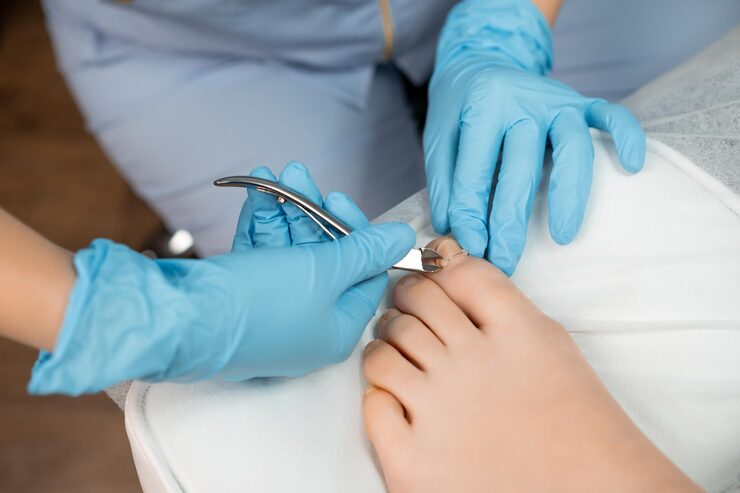
An ingrown toenail happens when the edge of the nail grows into the skin. It often affects the big toe and can cause pain, redness, swelling, or soreness. Mild cases may get better with simple home care. Some cases may need treatment from a healthcare professional. Knowing how to care for an ingrown toenail at home may help reduce mild pain and pressure around the nail.
Ingrown toenails in Livingston may range from mild irritation to a painful problem that makes walking or wearing shoes difficult. Home care may be suitable when there is only mild pain and no signs of infection. If symptoms worsen, keep returning, or do not improve, a podiatrist can examine the nail and recommend appropriate treatment.
How to Treat an Ingrown Toenail at Home
Mild ingrown toenails may sometimes be managed with simple care. The main goal is to reduce pressure on the nail and protect the skin while the nail grows.
Helpful steps may include:
- Soak the foot in warm water for about 15 to 20 minutes.
- Dry the foot carefully after soaking.
- Wear shoes with enough room for the toes.
- Avoid tight socks or footwear that presses against the nail.
- Keep the toe clean and dry.
- Avoid picking or digging around the nail.
Do not try to cut deeply into the side of the nail. This can injure the skin and worsen the problem.
Ingrown Toenail Infection Signs
Ingrown toenail infection signs can include increasing redness, swelling, warmth, tenderness, or drainage around the nail. Pus or worsening pain may also suggest an infection.
Medical attention is especially important when:
- Redness or swelling is spreading.
- Pus or other drainage is present.
- Pain is becoming worse.
- Walking becomes difficult
- Symptoms do not improve with home care.
- Fever or feeling unwell develops.
These symptoms may need prompt assessment rather than continued home treatment.
When to See a Doctor for an Ingrown Toenail
Knowing when to see a doctor for an ingrown toenail can help prevent a small problem from becoming more difficult to manage. A professional assessment may be needed when home care does not help or when the nail repeatedly ingrows into the skin.
A podiatrist in Livingston can examine the nail and surrounding skin to check the cause of the pain. Treatment may involve gently removing the part of the nail causing pressure. In some cases, a small part of the nail may need to be removed to help prevent the problem from returning.
Who May Need Professional Care?
Some situations require more care than others. A podiatrist near you may be able to provide safer treatment when symptoms are severe or keep coming back.
Professional assessment may be helpful when:
- The nail causes ongoing or severe pain.
- The skin is very swollen or tender.
- Signs of infection are present.
- The ingrown toenail keeps returning.
- Home care has not improved the symptoms.
- The nail is difficult to reach or treat safely.
What Treatment May Involve
Ingrown toenails in Livingston can often be checked during a foot exam. Your doctor may look at the nail, the skin around it, and any swelling or redness. This can help them decide what treatment you may need.
Depending on the problem, care may include:
- Removing the nail edge that is pressing into the skin
- Cleaning the affected area
- Giving aftercare instructions
- Recommending suitable footwear
- Treating infection when present
- Discussing ways to reduce the chance of recurrence
A podiatrist near you can explain each step of the treatment before it begins and answer questions about recovery.
How to Prevent Another Ingrown Toenail
Simple nail and footwear habits may help lower the chance of another ingrown toenail.
Useful habits include:
- Cut toenails straight across rather than rounding the corners.
- Avoid cutting nails too short.
- Wear shoes with enough toe space.
- Keep feet clean and dry.
- Avoid picking at the edges of toenails.
Get the Right Care for an Ingrown Toenail!
A painful or swollen ingrown toenail can make walking and wearing shoes uncomfortable. If home care is not helping or the problem keeps returning, a professional assessment can help identify the cause of the pressure and irritation. Goldberg Podiatry Center can examine the affected toenail, explain suitable treatment options, and provide guidance on care during recovery. Book an appointment to get your ingrown toenail checked and take the next step towards comfortable foot care.
FAQs
How do you know if an ingrown toenail is infected?
More redness, swelling, warmth, pain, or pus around the nail may indicate an infection. If symptoms get worse, see a healthcare professional.
Is it safe to cut out an ingrown toenail yourself?
Do not cut deeply into the side of the nail. This can harm the skin and worsen the problem. Take gentle care of the nail instead. If it remains painful or does not improve, see a healthcare professional.
How long does an ingrown toenail take to heal?
Healing time depends on how severe the problem is and whether treatment is needed. A mild case may improve with careful home care, while treated cases may take longer for the skin to settle.
What does a podiatrist do for a painful ingrown toenail?
A podiatrist examines the nail and surrounding skin and identifies where the nail is causing pressure. Treatment may involve removing the troublesome nail edge and providing care instructions.